Adsterra

Mostrando las entradas con la etiqueta lion pride behavior. Mostrar todas las entradas

Different Types of Animals: Where They Live, Evolution, and Key Facts — African Savanna Focus


Different Types of Animals: Where They Live, Evolution, and Key Facts — African Savanna Focus

Different Types of Animals: habitats, evolution, and precise facts — focus on the African savanna

This guide explores major animal groups, where they live, how evolution shaped their survival strategies, and the standout species of the African savanna.

Animal types and where they are found

Mammals

Overview: Warm-blooded vertebrates with hair/fur and live birth; found across biomes from tundra to savannas. In African savannas, large herbivores (elephants, zebras, antelopes) and apex predators (lions, cheetahs) dominate open grasslands with scattered trees.(african savanna animals)

  • Habitats: Savannas, forests, deserts
  • Traits: Endothermy, complex social behavior

Birds

Overview: Feathered vertebrates adapted for flight or terrestrial life; savanna species include ostriches and raptors, exploiting open sightlines and thermals for hunting and migration.

  • Habitats: Grasslands, wetlands, woodlands
  • Traits: Flight, high visual acuity

Reptiles

Overview: Ectothermic vertebrates (lizards, snakes) using sun exposure and shade to regulate temperature; in savannas, ambush and camouflage strategies thrive in open terrain and sparse tree cover.

  • Habitats: Grasslands, rocky outcrops, riparian zones
  • Traits: Scales, efficient water conservation

Amphibians & others

(zebra herd dynamics) Overview: Amphibians leverage seasonal rains and ephemeral pools; insects and arachnids form crucial prey bases and pollination networks in savannas, synchronized with wet–dry cycles.

  • Habitats: Seasonal wetlands, grass mats
  • Traits: Life cycles tied to rainfall

Evolution and adaptations across breeds and species

Open-plain selection: The African savanna’s wide grasslands and minimal tree density favor speed, endurance, and cooperative strategies—leading to evolutionary outcomes like cheetah acceleration, lion pride coordination, and giraffe height for browsing and vigilance.

Seasonal timing: Wet and dry seasons shape migrations (e.g., zebras and antelopes tracking forage), predator movements, and reproductive cycles, with physiological and behavioral adaptations tuned to drought and sudden abundance.

Diversity hotspots: While savannas exist in multiple continents, African savannas host exceptional fauna diversity and iconic guilds (mega-herbivores, apex predators, scavengers) due to climate, productivity, and evolutionary history.

What different types of animals live in the African savanna?

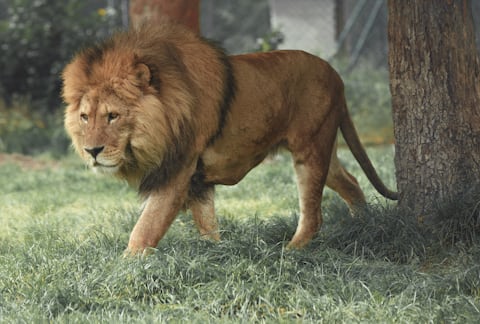
Lion pride resting on the savanna grass
Lions: Apex predators with social pride structure; coordinate hunts at dawn/dusk.
Cheetah scanning open grasslands
Cheetahs: Fastest land mammal; built for acceleration and short pursuit on open plains.
Elephant herd near acacia trees
Elephants: Mega-herbivores shaping vegetation; long-range movements for water and forage.
Giraffe browsing high foliage
Giraffes: Tall browsers accessing canopy leaves; height aids predator detection.
Hyena in golden light
Hyenas: Scavengers and hunters with powerful jaws; complex clan hierarchies.
Zebra herd on open grassland
Zebras: Herding herbivores; stripe patterns may disrupt predator focus and help social bonding.
Antelope grazing during wet season
Antelopes: Diverse grazers and browsers; migrations track seasonal rains and fresh grass.
Ostrich in open savanna
Ostriches & raptors: Birds adapted to visibility and speed; raptors exploit thermals for hunting.
Savanna snake camouflaged in dry grass
Reptiles: Snakes and lizards using camouflage and thermoregulation in sun–shade mosaics.

Sources:

Precise facts by functional guilds

  • Predators: Lions and cheetahs optimize dawn/dusk activity to balance heat stress and visibility in open terrain.
  • Mega-herbivores: Elephants engineer habitats by knocking down trees, opening grasslands and altering water access.
  • Herd dynamics: Zebras and antelopes synchronize movement with rainfall gradients to reduce predation risk via group vigilance.
  • Scavengers: Hyenas recycle nutrients and compete with lions, stabilizing the food web during dry seasons.
  • Thermoregulation: Reptiles exploit microhabitats (rock, shade, burrows) to maintain body temperatures and conserve water.

Keyword strategy for discovery and monetization

Goal: Reinforce the article with relevant keywords that typically target CPC in the $0.50–$1.00 range and average monthly searches ~1,000–10,000 (estimates vary by market and season). Use them naturally in headings, alt text, captions, and FAQs to boost relevance and CTR.

Primary keywords

  • African savanna animals — habitat, list, guide
  • Savanna predators — lions, cheetahs, hyenas
  • Herbivores in savanna — elephants, zebras, antelopes
  • Giraffe adaptations — feeding, height, vigilance
  • Elephant migration — water, forage, seasons

Support keywords

  • Lion pride behavior — cooperation, hunting
  • Cheetah speed — acceleration, pursuit
  • Hyena scavengers — food web, competition
  • Zebra herd dynamics — stripes, group vigilance
  • Savanna food chain — energy flow, drought cycles

Tip: Place primary keywords in H1–H2 and image alt texts; use support keywords in subheadings, bullets, and FAQs for semantic coverage.

FAQs

Is “savanna” the same as “Savannah”?

No. “Savanna” describes the African grassland biome; “Savannah” is a city in Georgia, USA.

Do savannas exist outside Africa?

Yes, in Asia, South America, and Australia, but the African savanna hosts exceptional fauna diversity compared to other regions.

What drives animal movement in the savanna?

Seasonal rains, forage availability, predation risk, and water access—producing long migrations and behavioral shifts across wet–dry cycles.

Lion roaring at sunrise
Lion: Cooperative ambush near waterholes.
Cheetah mid-sprint
Cheetah: Acceleration on open ground.
Zebras forming a herd
Zebra: Herd safety and striping.
Elephants moving across dry grass
Elephant: Habitat engineering and migration.

Sources:

Videos to reinforce learning

Predator–prey dynamics in the savanna

Focus on lions, hyenas, and cheetahs in open grassland contexts.

Migrations and seasonal cycles

Zebra and antelope tracking rains and fresh forage across regions.

Editorial note: Savannas feature wide grasses and scattered trees with pronounced dry seasons; African savannas uniquely host the fastest land animal, mega-herbivores, and complex predator guilds.

Citations: AnimalSpot — Savanna Animals; Flora Fauna Fun — Savanna Animals; HowStuffWorks — 10 Savanna Animals Roaming African Grasslands.

Different Types of Animals: Where They Live, Evolutionary Paths, and African Savanna Wildlife

Different Types of Animals: Where They Live, Evolutionary Paths, and African Savanna Wildlife

Different types of animals: habitats, evolution, and African savanna species

The world’s animals span mammals, birds, reptiles, amphibians, fish, and invertebrates, each lineage shaped by natural selection, ecological niches, and climate pressures. Their distribution reflects food availability, competition, and historical biogeography, resulting in distinctive communities from rainforests and coral reefs to deserts and grasslands.

Where animals are found and why it matters

Animals cluster in habitats that match their adaptations: speed in open grasslands, camouflage in forests, thermal tolerance in deserts, and buoyancy control in aquatic ecosystems. The African savanna is a classic example—an open grassland with scattered trees and a pronounced dry season—favoring species built for long-range movement, vigilance, and seasonal migrations.

Savannas occur across tropical and subtropical regions with prolonged dry periods and sparse tree cover; Africa hosts the most diverse savanna communities, where survival hinges on speed, stealth, and drought resilience.

Evolutionary paths: how breeds and species diverge

Evolution acts through variation, selection, and inheritance. Over many generations, populations split into distinct species when isolated by geography or ecology, leading to specialized traits like cursorial limbs in antelopes, social hunting in lions, and extreme height in giraffes for browsing. Even within species, populations can diverge into regional ecotypes or domesticated breeds with unique behaviors and morphologies.

In open biomes like the savanna, selection favors endurance, acute vision, cooperative strategies, and energy-efficient thermoregulation. Predator–prey dynamics drive arms races: speed and agility in prey versus stealth, coordination, and power in predators.

Which different types of animals live in the African savanna?

The African savanna hosts apex predators (lions), high-speed specialists (cheetahs), mega-herbivores (elephants), tall browsers (giraffes), migratory grazers (zebras, wildebeest), and resilient omnivores (spotted hyenas). Birds of prey, ground-dwelling birds, reptiles, and diverse antelope species round out this complex web of life.

Lion in the African savanna

Lion (Panthera leo)

Cooperative hunters forming prides; apex predators shaping herbivore behavior and population structure.

Cheetah running across grassland

Cheetah (Acinonyx jubatus)

Sprint specialist with lightweight frame; hunts in open terrain at extreme speeds.

African elephant browsing in savanna

African elephant (Loxodonta africana)

Mega-herbivore shaping vegetation; long-range movements for water and forage across seasons.

Giraffe feeding from acacia tree

Giraffe (Giraffa camelopardalis)

Extreme height for browsing; vigilance and wide visual range suit open landscapes.

Zebra herd in grasslands

Plains zebra (Equus quagga)

Migratory grazer with stripe-mediated social cohesion and predator confusion strategies.

Wildebeest migration

Blue wildebeest (Connochaetes taurinus)

Mass migrations track seasonal rains and fresh grass; cornerstone of savanna food webs.

Spotted hyena at dusk

Spotted hyena (Crocuta crocuta)

Powerful jaws, complex social structures; both scavenging and skilled hunting.

Antelope grazing in the savanna

Antelopes (e.g., Thomson's gazelle)

Speed, agility, and anti-predator vigilance; diverse niches across grassland mosaics.

Sources: AnimalSpot overview of savanna biomes and fauna; HowStuffWorks summary of African savanna species and traits.

SEO targets: relevant keywords to reinforce this article

Use these intent-rich queries to align with monetizable traffic in the African wildlife niche. They emphasize comparison, facts, and travel interest, supporting ad and affiliate models.

  • Keyword: african savanna animals list — intent: informational; angle: species roundup
  • Keyword: what animals live in the african savanna — intent: direct question; angle: quick answers
  • Keyword: big five animals africa — intent: travel/wildlife; angle: iconic species
  • Keyword: giraffe facts savanna — intent: educational; angle: species profile
  • Keyword: cheetah speed facts — intent: curiosity; angle: adaptation
  • Keyword: elephant migration africa — intent: documentary; angle: seasonal movement
  • Keyword: zebra stripes evolution — intent: scientific; angle: adaptation debate
  • Keyword: hyena behavior savanna — intent: behavioral; angle: social ecology
  • Keyword: antelope species africa — intent: taxonomy; angle: comparative traits
  • Keyword: african safari wildlife guide — intent: travel planning; angle: practical tips

Pair each keyword with concise, skimmable sections, internal links to species profiles, and thumbnail-rich cards to improve CTR and dwell time.

Article mini-thumbnails

Lion pride thumbnail Cheetah sprint thumbnail Elephant herd thumbnail Giraffe browsing thumbnail Zebra herds thumbnail

These thumbnails support quick navigation and higher click-through in related sections and social previews.

Quick FAQ: African savanna animal types

How do animals survive droughts in the savanna?

They track seasonal rains, migrate to forage-rich zones, reduce activity during heat, and exploit diverse diets including browsing, grazing, and scavenging.

Are savannas found outside Africa?

Yes. Savannas occur in multiple continents (e.g., South America, Australia, Asia), but the African savanna hosts unparalleled fauna diversity and iconic species.

Plan your learning or safari

Explore species profiles, compare adaptations, and map seasonal migrations to understand how life thrives in open grasslands.

Watch curated videos

Curated videos to reinforce the topic

These videos complement the article with visual storytelling on savanna ecosystems, predator–prey dynamics, and migration patterns.

African savanna wildlife overview

Predator–prey adaptations in open grasslands

Seasonal migrations and drought survival

© 2026 Wildlife Literacy Project. All rights reserved.

Traductor de Idiomas

¿Sabías que miles de perros ya usan Bravecto?

Protegé a tu compañero peludo con una dosis que dura hasta 12 semanas. Descubrí por qué esta solución está revolucionando el bienestar animal.

  • Bravecto MSD – 210 clics este mes
  • Collares antipulgas – 180 clics
  • Snacks saludables – 140 clics
🛒 Comprar Bravecto con descuento

Oferta válida hasta hoy a las 23:59. ¡No te lo pierdas!